HERE FISHY, FISHY, FISHY (omega 3)

GO FISH! And other foods high in Omega 3.
The benefits of Omega 3 fatty acids are indisputable. You hear that? Indisputable so no arguing with me. They cover everything from heart-health, the support of a healthy immune system, pain-free joints, brain and nerve health, and have anti-inflammatory properties. We can all benefit from consuming foods rich in Omega 3 fatty acids. A growing body of scientific research indicates that these healthy fats help prevent a wide range of medical problems, including cardiovascular disease, depression, asthma, and rheumatoid arthritis. So, eat your fish! Otherwise become a depressed, stiff person who can't breath who is on the verge of a heart attack. Not fun.
 Recent statistics indicate that nearly 99% of people in the United States do not eat enough omega 3 fatty acids. I wasn't able to find a study for Canada but I presume that we are on par or pretty darn close. Often, the symptoms of omega-3 fatty acid deficiency are very vague, and can be attributed to some other health conditions or nutrient deficiencies. Most people (or their doctors, for that matter) do not realize that these symptoms which include fatigue, dry and/or itchy skin, brittle hair and nails, constipation, frequent colds, depression, poor concentration, lack of physical endurance, and/or joint pain are simply the results of low Omega 3s.
It's important to realize that part of the problem is that we consume far too much Omega 6 and not enough Omega 3. Our diet has shifted away from fresh veggies and fish to foods high in omega-6s, such as crackers, cookies, fast food, and corn fed meat. We now consume, at least, 20 times more omega-6s than omega-3s. The problem lies in the fact that Omega 6 - a pro-inflammatory, which is found in vegetable oils like corn oil (all processed foods), grape seed oil and sunflower oils promote chronic inflammation in the body. Now don't get me wrong, inflammation is a good thing when we stub our toe, burn ourselves, or skin our knee but not chronically. When there is an imbalance of the Omega 3 and Omega 6 ratio, that whole inflammation process that our body needs to combat damaged cells becomes out of control and starts to attack our own bodies. The excess immune cells can damage healthy areas in our bodies, such as blood vessel linings (as in atherosclerosis), pancreatic tissue (in diabetes), joint tissue (in arthritis), gut mucosa (in lactose and gluten intolerance) — just for starters.
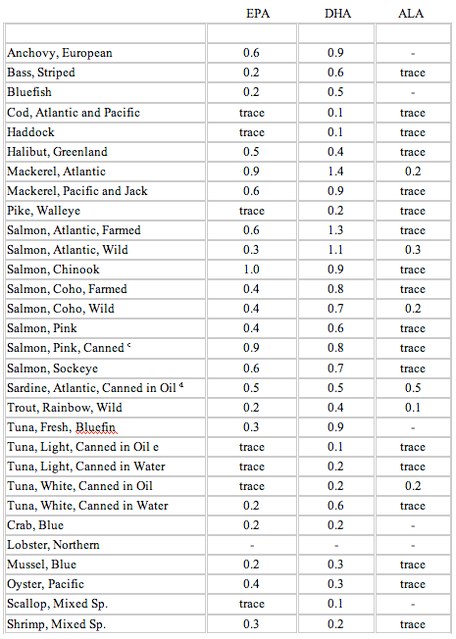
How do you balance Omega 3 & 6? Easy! Cut down on the processed foods for one and eat more whole foods high in Omega 3. Research indicates that omega-3s may be better absorbed from food than supplements. So I graciously supplied you with a list of foods high in Omega 3, with some commonly eaten but less beneficial sources in for comparison sake. The amounts are listed in grams per 100 grams (about 3.5 oz.) of food serving. This table looks at the three prominent members of the omega-3 group: EPA, DHA, ALA.
How do you balance Omega 3 & 6? Easy! Cut down on the processed foods for one and eat more whole foods high in Omega 3. Research indicates that omega-3s may be better absorbed from food than supplements. So I graciously supplied you with a list of foods high in Omega 3, with some commonly eaten but less beneficial sources in for comparison sake. The amounts are listed in grams per 100 grams (about 3.5 oz.) of food serving. This table looks at the three prominent members of the omega-3 group: EPA, DHA, ALA.
Another source of omega 3s is eggs from chickens that are fed omega-3 fortified meal. The omega-3 content varies considerably depending on brand. (anywhere from 30 mg to 175 mg per egg.) Our very own backyard chicken brand has Omega 3. How much? I couldn't tell you. We just feed our Ladybirds fish every now and then or flax seed. Considering I'm not about to eat fish at every meal, I'll just eat my fortified eggs and good quality supplement with some sort of sea life thrown in a few times a week to get my recommended daily amount.

* Be sure to check that you're actually getting a high DHA/EPA ratio because my fish oil states that it contains 1000 milligrams but there is only 200 mg combined of the actual beneficial Omega fats. To get the daily amount I require of 2 grams, I need to take a lot of capsules.*
Be sure to go to my FACEBOOK page "Cherry Bomb garage Gym" and if you like it click "LIKE"


Comments
Post a Comment